
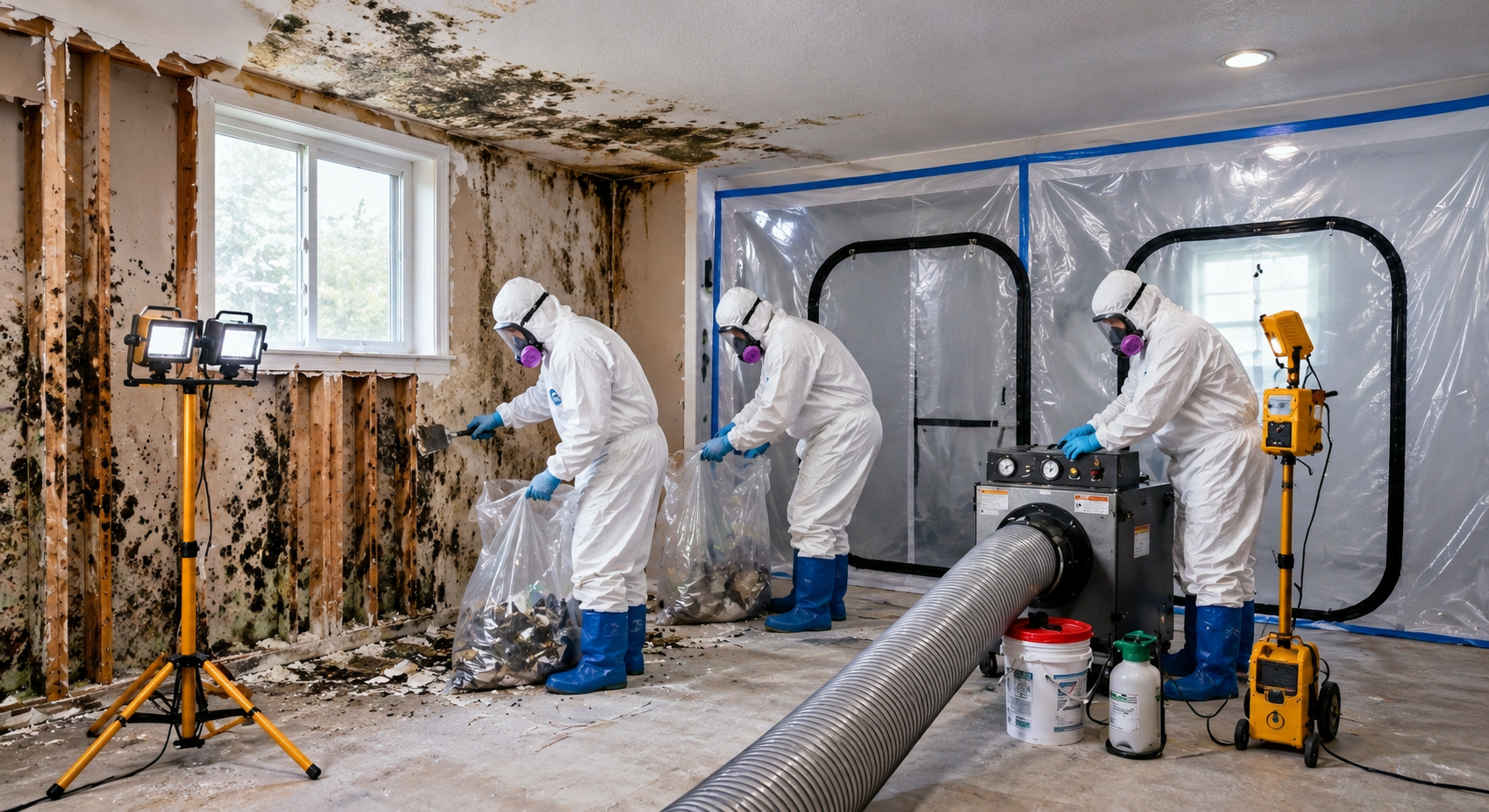
The person and the building both matter
Medically Important Remediation (MIR) is a careful, occupant-aware approach to addressing mold and other building-related contaminants where a resident has specific health concerns or increased environmental sensitivity.
Ordinary repair decisions can miss hidden moisture, contamination inside wall or ceiling cavities, or dust that may spread when materials are disturbed. A more deliberate plan considers the source of moisture, the affected materials, containment, air filtration, cleaning, and how the work will be checked before the area is returned to use.
People with a diagnosed condition such as Chronic Inflammatory Response Syndrome (CIRS), or those who report environmental sensitivities, should coordinate health questions and care with their qualified healthcare professional. Building assessment and remediation are not medical diagnosis or treatment.
What the process may include
Every building is different. The right scope depends on the inspection findings, the materials involved, applicable standards, and the needs of the occupants. Not every project requires every measure listed above.
Questions worth asking before work begins
- Has the moisture source been identified and addressed?
- What areas and materials are included in the written scope?
- How will the work area be contained and protected from dust migration?
- What air filtration and detailed cleaning steps are planned, if needed?
- Who will document completion, and what are the agreed verification criteria?
- Are the assessment, remediation, and verification roles clearly defined?
Medically important remediation is not a guarantee of a particular health outcome, and no single test can answer every building-health question. Clear documentation and a project-specific plan help everyone understand what is being done and how completion will be evaluated.
Additional resources
For further education, visit the CIRSx Institute, which offers Medically Important Remediation training, and Environmental Services Group Carolinas, which describes indoor environmental assessments and medically informed recommendations.